Does My Business Really Need Social Media?
The honest answer for local business owners who are tired of feeling guilty about their empty Instagram feed.
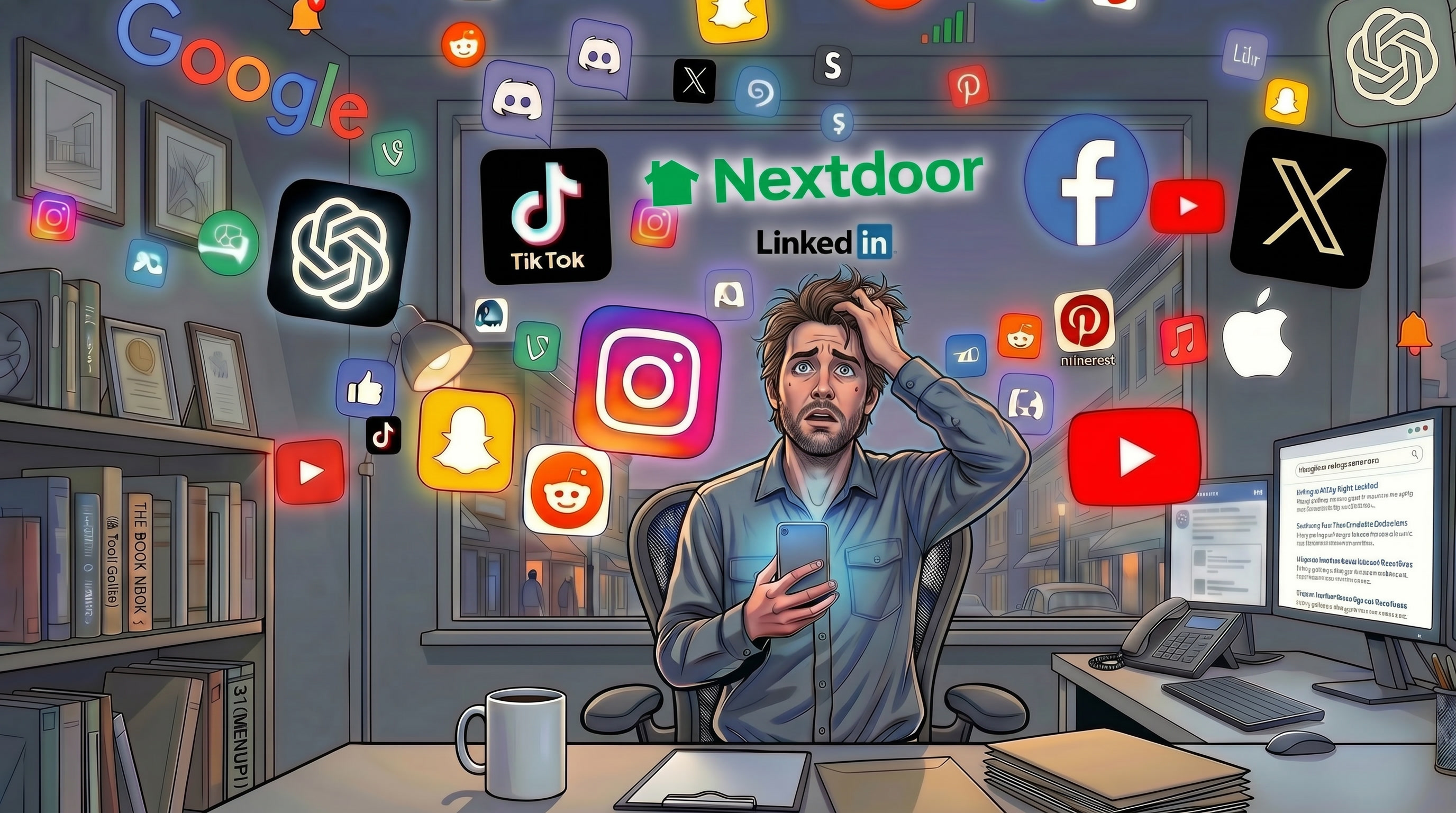
Every business owner I talk to feels at least a little guilty about social media. They know they're "supposed to" post more. They've started and abandoned an Instagram account. They've watched a competitor's TikTok go viral and wondered if they should be doing the same. So let's cut through the noise: does your business actually need social media in 2026?
The short answer: some businesses absolutely do, and some really don't. The longer answer is below, and it might save you a lot of wasted hours.
1. What Social Media Is Actually Good At
Social media is a discovery and trust-building tool, not a search engine. People don't usually open Instagram looking for a plumber. But they do scroll past content that builds familiarity with brands, and when they later need that service, the brand they've already seen wins.
Trust signals.
When a potential customer Googles your business, they often check your social profiles to see if you're "real." An active page with recent posts, real photos, and customer interactions signals legitimacy faster than a website ever can.
Showing the work.
Before-and-after photos, finished projects, behind-the-scenes shots, these are gold for service businesses. They're easy to capture on a phone and they do the selling for you.
Local visibility.
Tagging locations, showing up in neighborhood Facebook groups, and getting tagged by happy customers builds quiet word-of-mouth at scale. It's especially useful for businesses where the customer chooses based on community familiarity.
2. What Social Media Is Bad At (For Most Local Businesses)
This is where a lot of business owners get stuck. They post regularly, they get a few likes from friends, and… nothing happens. No calls. No leads. No money. Why?
Because organic reach on most platforms has cratered. Meta's algorithm shows your posts to a tiny fraction of your followers, often less than 5%, unless you pay. TikTok and Instagram Reels can still go viral, but for a roofer in Boise, virality isn't the goal: local intent is. And social platforms are terrible at delivering local intent compared to Google or Maps.
If your customer journey is "I have a problem → I search Google → I pick a top result," then social media is downstream of where the actual decision happens. It's not useless, but it's not where leads get generated.
3. The Businesses That Should Be on Social
A few categories genuinely benefit from regular social activity:
Visual or transformation-based businesses.
Salons, tattoo studios, landscapers, custom builders, painters, detailers, bakers, photographers. If your work looks impressive in a photo or short video, you have a built-in marketing engine.
Personality-driven brands.
Realtors, coaches, agencies, consultants. People hire you, not your company. Showing up consistently with your face and voice builds the trust that closes deals.
Retail, food, and hospitality.
Restaurants, cafes, boutiques, gyms, event venues. Customers actively browse Instagram and TikTok to decide where to spend money on experiences.
Businesses with active customer communities.
If your customers already talk to each other (hobby shops, local clubs, niche services), social platforms are where the conversation lives.
4. The Businesses That Don't Need to Bother
For many service businesses, especially urgent, one-and-done services, social media is the wrong place to spend your time. If you're a plumber, electrician, garage door repair company, locksmith, or appliance technician, your customers are not scrolling Instagram looking for you. They're typing "plumber near me" into Google at 9pm with water on the floor.
For these businesses, the marketing dollar is almost always better spent on:
- A fast, well-built website that actually ranks
- A fully optimized Google Business Profile
- A serious review-collection process
- Local SEO and Google Ads for high-intent keywords
A "good enough" Facebook page that simply exists, has accurate info, and a few real photos is often all you need on the social side. Don't feel guilty about not posting Reels.
5. If You Are Going to Do Social, Do It Realistically
The single biggest reason small business social media fails is unrealistic expectations. Posting twice and giving up doesn't work. Posting daily for two months and burning out doesn't work either.
What works is a sustainable rhythm, usually one or two posts a week, on the one platform where your customers actually are. Pick the platform, ignore the others, and commit for at least six months before judging the results.
Pick one platform.
For most local visual businesses, Instagram. For older demographics or community-based businesses, Facebook. For younger demographics or anything trend-driven, TikTok. Don't try to do all three.
Use real photos and real voice.
Stock photos and AI-generated captions are immediately obvious in 2026, and they kill trust. Phone photos of real work, with a real human caption, beat polished content every time.
Repurpose, don't create from scratch.
Every job site, every customer review, every finished project is content. Snap a quick photo or 15-second video while you're already there. The best social content for service businesses is captured in the field, not produced in an office.
Always link back to your website.
Treat social as a top-of-funnel feeder. The goal is to move people from a scroll to your site, where you actually own the relationship and where they can take real action.
The Bottom Line
Social media is not a magic growth lever for most local businesses. For some, it's a real engine. For others, it's a guilt-inducing time sink that distracts from the things that actually drive revenue.
Be honest with yourself about which kind of business you have. If social genuinely fits your customer's buying behavior, commit and do it well. If it doesn't, give yourself permission to deprioritize it, and put that time and money into the channels where your customers actually decide.
Not sure where your time and money should go?
A Mission Plan tells you straight: where you actually rank in search and AI answers today, and what's worth fixing first.
Get Your Mission PlanLiked this? Get more every month in What's Up
Exclusive monthly newsletter for Website members and approved cheat-code contributors.
How to get access →